Insights and Resources
Why Co-Managed IT Is the Smartest Move Your Internal IT Team Will Ever Make
Published 2026-01-20 by Mark Schilling · 10 min read
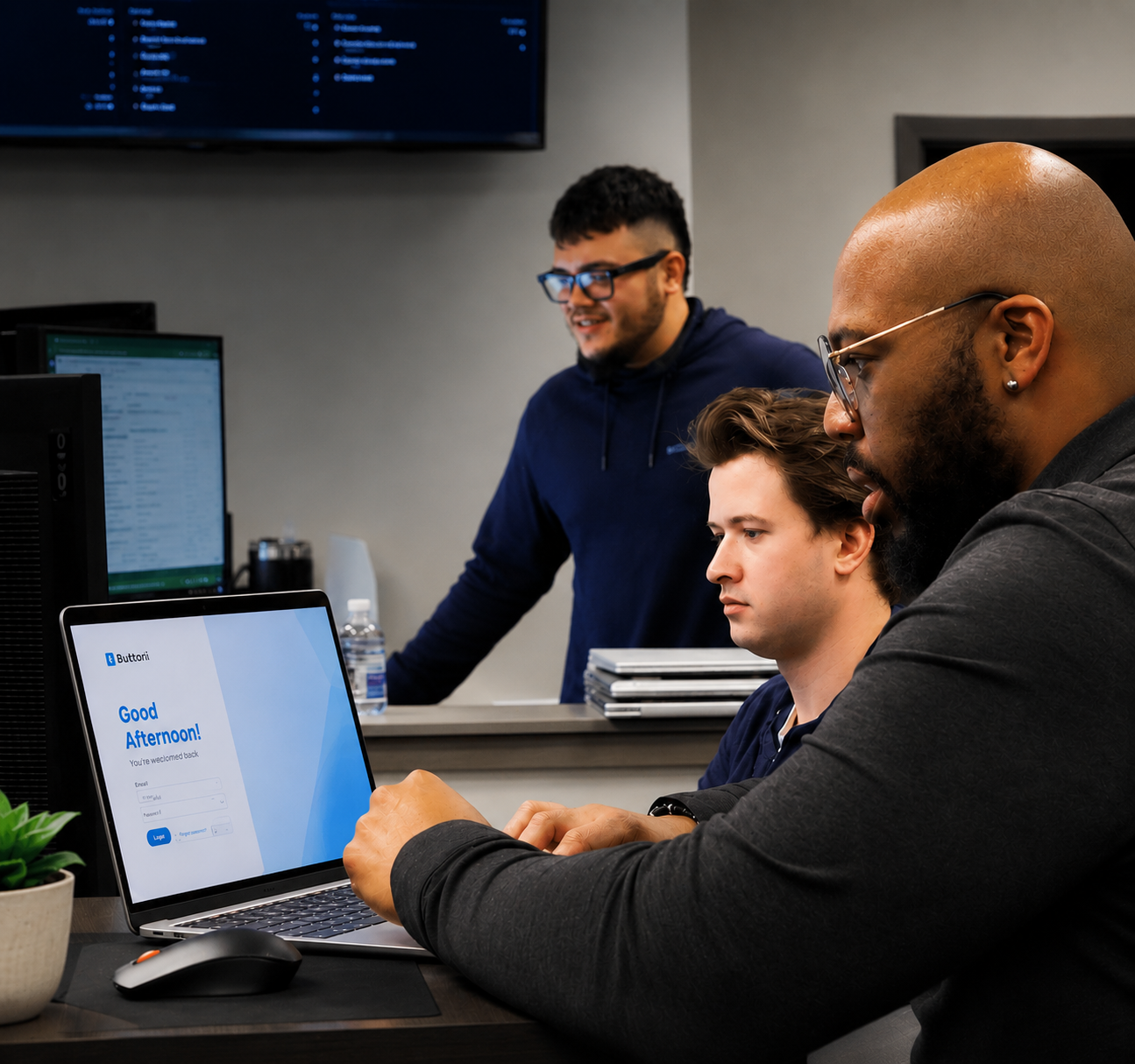
Your IT person is good at their job. Maybe very good. But right now, they are probably fielding a help desk ticket, monitoring a server alert, chasing down a vendor about a licensing renewal, and mentally preparing for the compliance audit that is three weeks away - all at the same time.
That is not a staffing problem. That is a structural one. And it is one of the most common situations we encounter when talking with business leaders and IT managers across Northwest Indiana and the Chicago suburbs.
Co-managed IT exists to solve exactly this problem. Not by replacing your internal team, but by giving them the depth, coverage, and specialized muscle they cannot realistically build on their own. This post is written for two audiences: the business owner or executive who is wondering whether their IT setup is actually sustainable, and the IT professional who already knows the answer but has not yet been able to make the case for reinforcements.
The Structural Problem No One Talks About Honestly
There is a version of this story that plays out in organizations of every size. A company hires one IT person - or maybe two or three - and those people are genuinely talented. They keep things running. They fix problems. They know the environment inside and out. Over time, the company grows, the technology stack expands, and the threat landscape gets more complicated. But the IT headcount stays the same.
The result is an IT team that is technically capable but operationally overwhelmed. According to a study commissioned by GoTo and conducted by OnePoll, more than 58% of IT workers say they feel overwhelmed by their daily responsibilities, and the average IT worker reports having the capacity to handle only 85% of the tickets they receive each day. That 15% gap does not disappear - it accumulates as deferred maintenance, delayed projects, and mounting risk.
This is not a failure of the IT team. It is a failure of the model. A single generalist IT administrator, no matter how skilled, cannot simultaneously be a cybersecurity analyst, a cloud architect, a compliance specialist, a help desk technician, and an on-call engineer available at 2 AM on a Saturday. Yet that is precisely what many organizations expect.
Co-managed IT is the honest answer to that expectation.
What Co-Managed IT Actually Means
Co-managed IT is a partnership model in which an external managed service provider works alongside your existing internal IT staff - not instead of them. Your team retains ownership of strategy, institutional knowledge, vendor relationships, and the decisions that require business context. The MSP fills the operational gaps: after-hours coverage, specialized security tooling, project execution capacity, and the functions your team simply does not have the bandwidth or expertise to own.
The clearest way to understand the distinction is through a simple question: Do you have internal IT staff you want to keep? If yes, co-managed is the right model. If no, fully managed IT is the answer.
The division of responsibility is defined by you. A well-structured co-managed engagement begins with a written responsibility matrix - a clear document that specifies which functions your team owns and which the MSP owns. Without that clarity, the model creates dangerous gray areas. With it, both teams operate with confidence and accountability.
| IT Function | Internal Team | MSP Partner |
|---|---|---|
| IT strategy and budget | Owns | Advises |
| Help desk (Tier 1-2 tickets) | Escalation point | Owns |
| 24/7 monitoring (RMM) | Dashboard visibility | Owns |
| Patch management | Approves schedule | Executes |
| Cybersecurity operations (EDR/SIEM) | Reviews reports | Owns |
| After-hours and weekend on-call | Morning handoff | Owns |
| Backup and disaster recovery | Tests annually | Manages daily |
| Vendor contracts and negotiation | Owns | Supports |
| Major projects (migrations, buildouts) | Leads | Adds capacity |
| Compliance documentation | Owns evidence | Prepares reports |
Why This Model Is Growing - and Why It Makes Sense Right Now
Co-managed IT has moved from a niche arrangement to a mainstream delivery model. Industry observers describe 2026 as the year the collaborative model stops being a nice-to-have and becomes one of the most strategically sound ways for mid-market organizations to run technology. The broader managed services market is expanding at roughly 10-15% annually, with the global market projected to reach $511 billion by 2029. Co-managed IT is one of the faster-moving segments of that growth, precisely because it captures organizations that already have internal IT and have no intention of giving it up.
Three structural forces are driving this shift simultaneously, and none of them are going away.
IT complexity has genuinely outrun the internal team. Hybrid work, multi-cloud infrastructure, an evolving regulatory landscape, and an AI-driven threat environment have made the modern IT stack too broad for a small department to cover comprehensively. The cybersecurity dimension alone has become a full-time discipline. There are currently an estimated 3.4 million unfilled cybersecurity positions globally, and the global workforce would need to grow by 65% just to meet current demand. Expecting an internal generalist to stay ahead of that in their spare time is not a reasonable expectation - it is a liability.
Hiring your way out is expensive and slow. Building a deep internal bench means recruiting and retaining specialists across security, cloud, compliance, and networking. In a tight talent market, that is both costly and often impossible. A single IT specialist hire costs $65,000-$95,000 per year in base salary alone, before benefits, tools, training, and the months-long cost of recruiting. A co-managed engagement at comparable cost delivers a team of specialists covering multiple disciplines, 24/7 operational coverage, and enterprise-grade tooling - all included.
Organizations want support without surrendering control. This is the heart of why co-managed is winning. Full outsourcing forces a choice between control and support. Many businesses, especially as they grow, do not want to give up the institutional knowledge and business context their internal people hold. Co-managed lets them keep that and add external muscle where they are thin.
The Five Situations Where Co-Managed IT Delivers the Most Value
1. The One-Person IT Department
This is the most common scenario we see, and arguably the most precarious. A single IT administrator is a single point of failure. When that person is on vacation, sick, or decides to leave, the organization has no coverage and no continuity. We have written about key person risk in a previous post, and the IT function is one of the most acute examples of it.
Co-managed IT gives the one-person IT department a team behind them. The MSP handles after-hours alerts, overflow tickets, and the specialized work that falls outside the generalist's expertise. The internal person stops being a 24/7 on-call resource and starts being a strategic asset who actually has time to think.
2. The Small IT Team with Expertise Gaps
A team of two or three IT generalists can handle a lot. What they typically cannot handle is a ransomware event at 2 AM, a HIPAA compliance audit, a SIEM that needs tuning, or a cloud migration that requires an architect-level skill set. These are not failures of the team - they are simply outside the scope of what a generalist is trained and paid to do.
Co-managed IT fills those gaps without requiring the organization to hire a cybersecurity analyst, a cloud engineer, and a compliance specialist as separate full-time employees. The MSP brings those capabilities as part of the engagement, available when needed and not carried as overhead when they are not.
3. The Organization with Compliance Requirements
HIPAA, NIST, CMMC, and cyber insurance requirements have all become significantly more demanding in recent years. Cyber insurance carriers in particular are now requiring documented evidence of specific controls - multi-factor authentication, endpoint detection and response, patch management cadences, and incident response plans - before they will issue or renew a policy.
Most internal IT teams do not have the bandwidth to build and maintain that documentation stack on top of their operational responsibilities. A co-managed MSP partner can own the compliance documentation function, prepare evidence packages, and ensure the environment stays audit-ready on a continuous basis rather than scrambling before each renewal.
4. The Growing Mid-Market Company
Organizations that have outgrown fully outsourced IT but are not yet ready to build a full internal department occupy an awkward middle ground. They have enough complexity to need internal expertise, but not enough scale to justify a fully staffed IT organization.
Co-managed IT bridges that gap cleanly. The internal IT hire focuses on business-specific knowledge, vendor relationships, and strategic planning. The MSP provides the operational depth, tooling, and coverage that would otherwise require three or four additional hires.
5. The IT Team Facing Burnout
Burnout is not a soft issue. According to CIO research, 71% of full-time employees report feeling burned out, and cybersecurity professionals are among the hardest hit - with over 33% of US and UK security professionals reporting they are considering leaving their jobs within the next six months. When an IT team is burned out, the consequences are concrete: slower response times, deferred maintenance, higher turnover, and an organization that is one bad day away from a serious incident.
Co-managed IT removes the structural causes of IT burnout. After-hours alerts go to the MSP's on-call rotation. Overflow tickets get absorbed. The internal team stops being the only line of defense for everything and starts being the strategic layer they were hired to be.
What Your Internal Team Actually Gets
Enterprise-grade tooling without the enterprise price tag. Most internal IT teams cannot justify the cost of a commercial SIEM, an AI-powered EDR platform, or a dark web credential monitoring service as standalone purchases. A co-managed MSP partner brings those tools as part of the engagement. Your internal team gets access to the same platforms, dashboards, and reporting - not just the MSP.
A peer network and escalation path. One of the loneliest parts of being a one-person IT department is having no one to call when something goes wrong that is outside your experience. A co-managed partner gives the internal team an escalation path staffed by engineers with specialized expertise across security, cloud, networking, and compliance.
Time to do strategic work. The most common feedback we hear from internal IT professionals after a co-managed engagement begins is that they finally have time to work on the projects that actually move the business forward. Infrastructure upgrades, cloud migrations, AI enablement initiatives - these are the projects that create business value. They are also the first things that get pushed aside when the help desk queue is full and the on-call phone is ringing.
Professional development by proximity. Working alongside a team of specialists accelerates the internal team's own skill development. This is not a threat to the internal team's job security - it is the opposite. An internal IT person who has been exposed to enterprise security operations, cloud architecture, and compliance frameworks is a more valuable employee, not a more replaceable one.
The AI Dimension: Why Co-Managed IT Matters More Than Ever
The rapid adoption of AI tools across the business environment has created a new category of IT challenge that most internal teams are not equipped to address alone. Shadow AI - employees using ChatGPT, Microsoft Copilot, or other AI tools without IT oversight or governance - is now one of the fastest-growing blind spots for internal IT departments. Learn more about what Shadow AI is and why it matters.
The problem is not that employees are using AI. The problem is that they are often doing so in ways that expose sensitive business data, violate compliance requirements, or create security vulnerabilities that the internal team has no visibility into. Addressing this requires a combination of policy development, technical controls, and ongoing monitoring - exactly the kind of multi-disciplinary work that benefits from a co-managed partnership.
At Schilling IT, our AIOps platform brings automated patching, predictive alerting, and AI-assisted ticket resolution to co-managed environments. This gives the internal team leverage they could not build alone - not by replacing their judgment, but by removing the manual overhead that consumes their time.
The Honest Conversation About What Co-Managed IT Is Not
Co-managed IT is not a takeover. The arrangements that fail tend to fail on governance: unclear ownership of responsibilities, blurry escalation paths, and tension between internal staff and the external provider over who owns what. A co-managed relationship demands a clear shared-responsibility model from day one.
It is also not a threat to the internal team's job security. The MSPs that do this well position themselves as a resource that makes the internal team more effective - not a replacement waiting in the wings. In practice, organizations that adopt co-managed IT tend to invest more in their internal IT staff over time, not less, because the business sees the value that IT delivers when it is properly resourced.
Finally, co-managed IT is not a permanent state. Some organizations use it as a bridge while building out their internal team. Others use it as a long-term operating model because the economics and coverage it provides are simply better than the alternative. Either approach is valid. The right answer depends on the organization's size, growth trajectory, and risk profile.
Is Co-Managed IT Right for Your Organization?
If any of the following are true, the answer is probably yes. Your IT team is one to five people managing fifty or more employees and cannot keep pace with both operational demands and strategic initiatives. Your organization has compliance requirements - HIPAA, NIST, cyber insurance - that demand security depth your internal team cannot build alone. Your IT staff is regularly handling after-hours alerts or weekend emergencies on their personal time. You have had a key IT person leave and discovered how much institutional knowledge walked out the door with them. You have infrastructure projects that have been on the roadmap for months but never get started because the team is too busy keeping the lights on.
Co-managed IT is not the right answer for every organization. But for the organizations that fit this profile - and there are a lot of them across Northwest Indiana and the Chicago suburbs - it is often the most cost-effective, lowest-risk path to a technology environment that actually supports where the business is going.
What to Do Next
If you are an IT professional reading this and thinking it describes your situation, the most useful next step is an honest conversation with your leadership about what the current model is costing the organization - in deferred projects, in burnout risk, in compliance exposure, and in the key person risk that comes with a small internal team.
If you are a business owner or executive reading this and wondering whether your IT setup is sustainable, the answer is worth finding out before something forces the issue.
Schilling IT has been working alongside internal IT teams across Northwest Indiana and Chicagoland for over fifteen years. We are locally owned, we know the region, and we have built co-managed IT engagements for organizations ranging from single-person IT departments to teams of five or six people who needed specialized depth they could not hire for.
If you want to talk through what a co-managed partnership could look like for your organization, we are happy to have that conversation - no scripts, no pressure. Get a free co-managed assessment or call us directly at (219) 359-3101.
Frequently Asked Questions
Will co-managed IT undermine my internal IT staff?
No - and this is the most common concern we hear. A well-structured co-managed engagement is built around your internal team's strengths. The MSP fills gaps and handles overflow; your team retains strategic authority and institutional knowledge. In practice, internal IT professionals in co-managed arrangements tend to report higher job satisfaction because they finally have time to do the work they were hired to do.
How does ticketing and escalation work?
Your internal team and the MSP share a ticketing platform with full visibility on both sides. Tickets are routed based on the responsibility matrix established at the start of the engagement. Business-specific issues escalate to your internal team; operational and after-hours issues route to the MSP. Nothing falls through the cracks.
What security tools does the MSP bring?
At Schilling IT, co-managed clients gain access to our full enterprise security stack: AI-powered EDR, SIEM, dark web credential monitoring, automated patch management, and compliance documentation support. Your internal team gets dashboard access to all of it - not just reports.
How is co-managed IT priced?
Co-managed IT is typically priced per user per month, at a lower rate than fully managed IT because your internal team absorbs a portion of the delivery workload. For most organizations, a co-managed engagement costs 30-50% less than fully outsourced IT for the same user count.
What does the onboarding process look like?
We start with a discovery conversation to understand your current environment, your team's strengths, and where the gaps are. From there, we build a responsibility matrix together and establish the tooling, documentation, and communication workflows before the engagement goes live. The goal is a clean handoff with no disruption to your team or your users.