Insights and Resources
Why Your IT Department Deserves a Seat at the Business Planning Table in 2025
Published 2025-08-29 by Mark Schilling · 7 min read
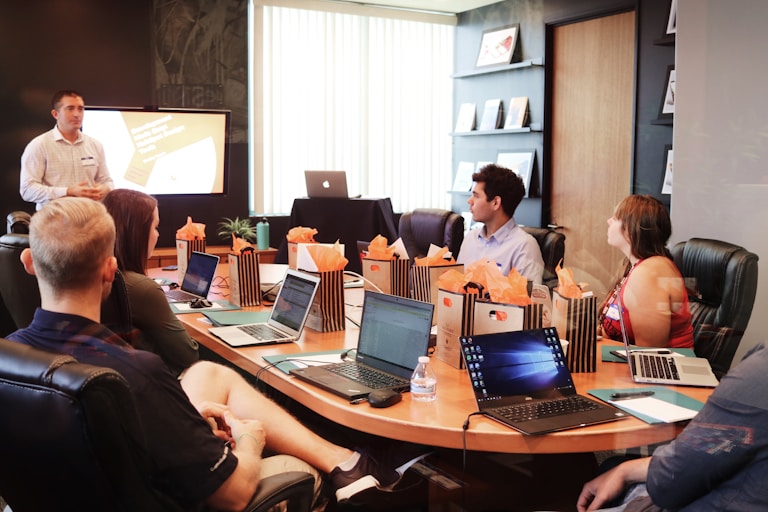

As we step into 2025, business leaders are refining strategies, setting ambitious goals, and finalizing budgets to ensure this year is one for the books. Whether your focus is on expanding, streamlining, or innovating, one crucial ally often overlooked during planning is your IT department.
Including your IT team in business planning isn’t just a nice gesture-it’s a necessity for modern, resilient, and forward-thinking businesses. Let’s dive into why technology and IT expertise are the secret weapons your organization needs to succeed in 2025 and beyond.
1. Technology: The Backbone of Modern Business
From cloud-based platforms to secure networks and automation tools, technology is no longer just a supporting act-it’s the main stage. Everything from customer engagement to internal workflows relies on technology to operate seamlessly.
When IT isn’t part of your strategic discussions, critical decisions about scaling, efficiency, and innovation may miss a vital perspective. The result? Misaligned investments, operational bottlenecks, and unrealized potential.
By involving IT in your business planning early on, you’re ensuring your strategies are grounded in practicality and supported by a robust technology framework.
2. Proactive Problem Solving > Reactive Firefighting
An IT team left out of the loop is stuck in firefighting mode, scrambling to address issues as they arise. But when included from the start, your IT department can proactively identify challenges and create solutions before they ever disrupt your business.
For instance:
- Expanding Your Footprint? IT ensures the infrastructure-like networks, hardware, and security-is ready to support the growth.
- Launching a New Product or Service? IT can recommend the best platforms and integrations to streamline delivery and user experience.
Proactive IT involvement minimizes downtime, avoids costly mistakes, and positions your business to achieve its goals smoothly.
3. Cybersecurity: A 2025 Imperative
In 2025, cybersecurity is no longer just an IT concern; it’s a business-critical priority. Cyberattacks are more sophisticated than ever, and the average cost of a data breach continues to climb, with recent figures exceeding $4.5 million per breach globally.
When IT has a voice at the planning table, they can embed cybersecurity into your business strategy, helping you:
- Stay compliant with evolving regulations.
- Educate employees on emerging cyber threats.
- Allocate budgets for updated security tools and practices.
Strong cybersecurity isn’t just about prevention; it also enhances customer trust, proving that your business takes data protection seriously.
4. Aligning Technology with Business Goals
The right technology can supercharge your goals-but only if it’s aligned with your objectives. Your IT team is uniquely positioned to help you identify and implement tools that directly support your strategic vision.
Think about goals like:
- Boosting Productivity: Implementing collaborative tools like Slack or advanced project management software.
- Scaling Operations: Leveraging cloud solutions to enable flexible growth.
- Enhancing Customer Experience: Using data analytics to personalize services and predict trends.
Involving IT ensures that every tech investment is intentional, strategic, and impactful.
5. Future-Proofing Your Business for What’s Next
The pace of technological change is accelerating in 2025, and businesses that fail to adapt risk being left behind. From AI-driven tools to cutting-edge automation, your IT team can provide valuable insights into which trends and innovations are worth pursuing-and how to integrate them effectively.
When IT has a voice in your planning, your business is better equipped to embrace change and position itself for long-term success.
How to Include IT in Your 2025 Business Planning
So, how can you ensure IT has a meaningful role in your strategy discussions?
- Invite IT to the Table: Treat IT as a strategic partner, not just a support function.
- Share Your Vision: Clearly communicate business goals so IT can identify the right technological solutions.
- Collaborate on Budgets: Work together to ensure your tech investments align with your broader financial plans.
- Encourage Ongoing Communication: Schedule regular check-ins between IT and leadership to maintain alignment throughout the year.
Start 2025 Strong with Strategic IT Involvement
The businesses thriving in today’s fast-paced world are those that treat IT as a core part of their strategy, not an afterthought. By including your IT department in your business planning for 2025, you’re not just setting goals-you’re building the technological foundation needed to achieve them.
As you look ahead to the opportunities and challenges this year brings, make sure IT is at the table. Their expertise could be the key to turning your vision into reality.
Want to align your IT strategy with your 2025 business goals? Schilling IT is here to help. Let’s make this year your best yet.
The Cost of Leaving IT Out of the Room
Here's a scenario that plays out in businesses across Northwest Indiana every year. A leadership team decides to open a second location. They sign a lease, hire staff, and set a launch date - and then, three weeks before opening, they call their IT provider and say "we need everything set up by Friday." What follows is a scramble: rushed hardware procurement at full retail price, network infrastructure that wasn't designed for the space, a phone system that doesn't integrate with the main office, and a security posture that's been compromised by the shortcuts taken to meet the deadline.
The same scenario plays out with software decisions. A CEO sees a demo of a new CRM and signs a contract without involving IT. Six months later, the CRM can't integrate with the accounting system, the data migration is a disaster, and the IT team is spending 20% of their time supporting a platform they had no input on selecting.
These aren't IT failures. They're planning failures. And the fix is simple: bring IT into the conversation before decisions are made, not after.
What IT Brings to the Strategic Planning Table
When IT leaders are included in business planning, they contribute perspectives that no other function can provide:
Feasibility Assessment: Before you commit to a new initiative, your IT team can tell you whether your current infrastructure can support it, what it will cost to make it work, and how long it will take. This prevents the "we didn't budget for that" conversations that derail projects mid-execution.
Risk Identification: IT leaders see risks that business leaders often miss - vendor lock-in, data sovereignty issues, compliance gaps, single points of failure. Including IT in planning means these risks are identified and mitigated before they become crises.
Technology Roadmap Alignment: Every business has a technology roadmap, whether it's documented or not. When IT is at the planning table, that roadmap gets aligned with business priorities. Hardware refresh cycles get planned around business growth, not around equipment failure. Software upgrades get timed to minimize disruption to revenue-generating activities.
Vendor Evaluation: IT leaders know which vendors are reliable, which have problematic support models, and which are likely to be acquired or discontinued. This institutional knowledge is invaluable when evaluating new technology investments.
How to Structure IT's Role in Business Planning
For many small and mid-size businesses, the challenge isn't recognizing that IT should be at the table - it's figuring out how to make that work practically. Here's a framework that works well for businesses in the 10–100 employee range:
Strategic Business Reviews (SBRs): Schedule a formal 60-minute meeting each quarter between leadership and your IT team (or MSP). The agenda should cover: current technology performance, upcoming business initiatives and their IT implications, security posture review, and technology investment recommendations for the next quarter. Schilling IT conducts SBRs with all managed IT clients as a standard part of our service.
IT Input on Major Decisions: Establish a simple rule: any decision that involves technology, data, or communication systems requires IT sign-off before commitment. This doesn't mean IT has veto power - it means IT has the opportunity to identify issues and propose solutions before contracts are signed.
Annual IT Strategic Planning: Once per year, conduct a formal IT strategic planning session that aligns technology investments with the business plan for the coming year. This session should produce a documented IT roadmap with specific initiatives, timelines, and budgets.
The Strategic Advisory Model for Businesses Without In-House IT Leadership
Many small and mid-size businesses don't have a CIO or IT Director - they have an IT generalist or an MSP. This doesn't mean they can't have strategic IT leadership. The Strategic IT Advisory model, offered by Schilling IT as part of our managed IT services, provides businesses with access to senior IT leadership on a fractional basis.
A dedicated strategic advisor from Schilling IT attends your quarterly planning meetings, reviews your technology roadmap, advises on major technology decisions, and ensures your IT investments are aligned with your business goals. For businesses that can't justify a full-time CIO salary ($150,000–$250,000 per year), the strategic advisory model delivers the same executive-level guidance at a fraction of the cost.
Frequently Asked Questions: IT Strategy for Indiana Businesses
How do I know if my IT is aligned with my business strategy?
A simple test: can your IT team articulate your top three business priorities for the next 12 months? Can they explain how your current technology investments support those priorities? If the answer to either question is no, your IT and business strategy are not aligned. Schilling IT's strategic advisory service is specifically designed to close this gap.
What is strategic IT advisory, and does my business need it?
A strategic IT advisor works with your business on a part-time or fractional basis, providing the strategic leadership of a full-time CIO without the full-time salary. Most businesses with 10–100 employees benefit from strategic advisory services, particularly during periods of growth, technology transition, or when facing significant cybersecurity challenges. Schilling IT includes strategic advisory in our managed IT plans.
How often should IT be involved in business planning meetings?
At minimum, quarterly. For businesses undergoing significant growth or technology change, monthly check-ins are appropriate. The key is consistency - ad hoc IT involvement is far less effective than structured, regular engagement.
What questions should I ask my IT provider in a planning meeting?
Ask: What are the top three technology risks to our business right now? What investments would have the highest ROI in the next 12 months? Are there any compliance gaps we need to address? What is our current backup and recovery capability, and when was it last tested? What would happen to our operations if our primary internet connection failed? These questions reveal whether your IT provider is thinking strategically or just reactively.
How does Schilling IT approach IT strategic planning for clients?
Schilling IT conducts strategic business reviews with all managed IT clients, provides dedicated strategic advisory for IT guidance, and produces an annual IT roadmap aligned with each client's business plan. We believe that IT should be a business enabler, not a cost center - and our planning process is designed to demonstrate that value concretely. Contact us at 219-359-3101 to learn more about our managed IT and strategic advisory services.
Is your IT strategy aligned with your business goals? Schilling IT provides strategic IT advisory and planning for businesses across Northwest Indiana and the Chicago area. Schedule a free strategic IT assessment.